Selected case study
Desk Chair for Hot & Humid Climates
A ventilated seating system designed to reduce heat and sweat discomfort during prolonged sitting.
Problem
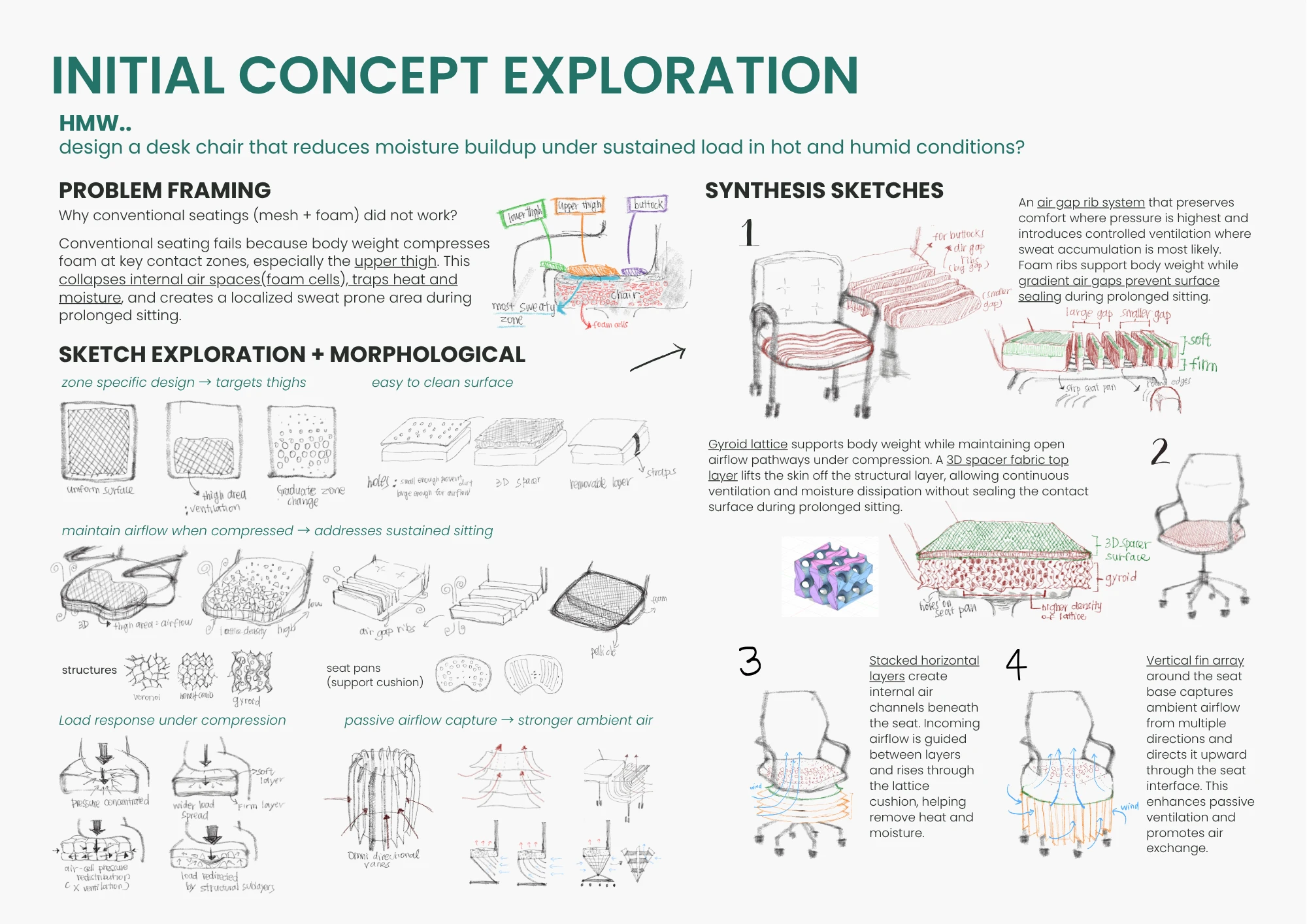
How might a desk chair reduce sweat under sustained load?
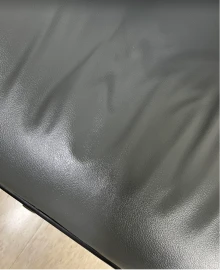
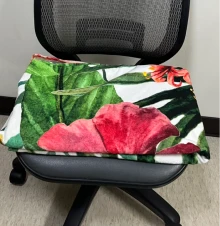
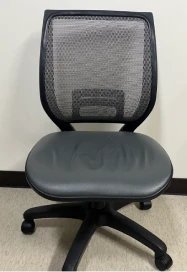
In hot and humid climates, foam cushions trap heat and moisture as body weight compresses their internal air spaces. This creates localized sweat zones even in air-conditioned rooms.
Research insight
Discomfort was treated as inevitable
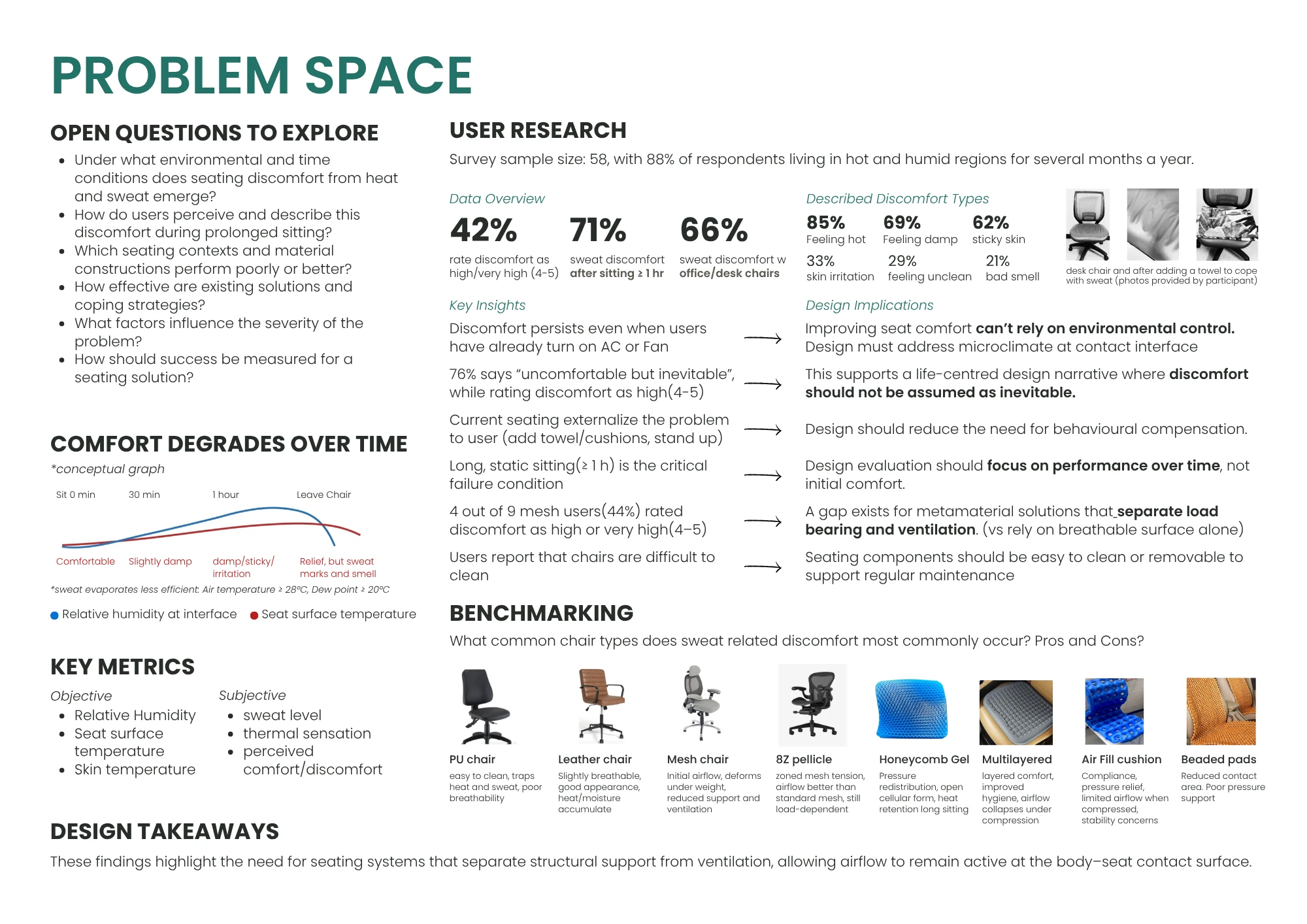
An online survey of 58 people, 88% of whom spend months each year in hot and humid regions, showed that discomfort becomes common after an hour of sitting.
- 0142% rated discomfort as high or very high
- 0271% experienced discomfort after sitting for at least one hour
- 0366% experienced it in office or desk chairs
- 0476% described the problem as uncomfortable but inevitable
Design solution
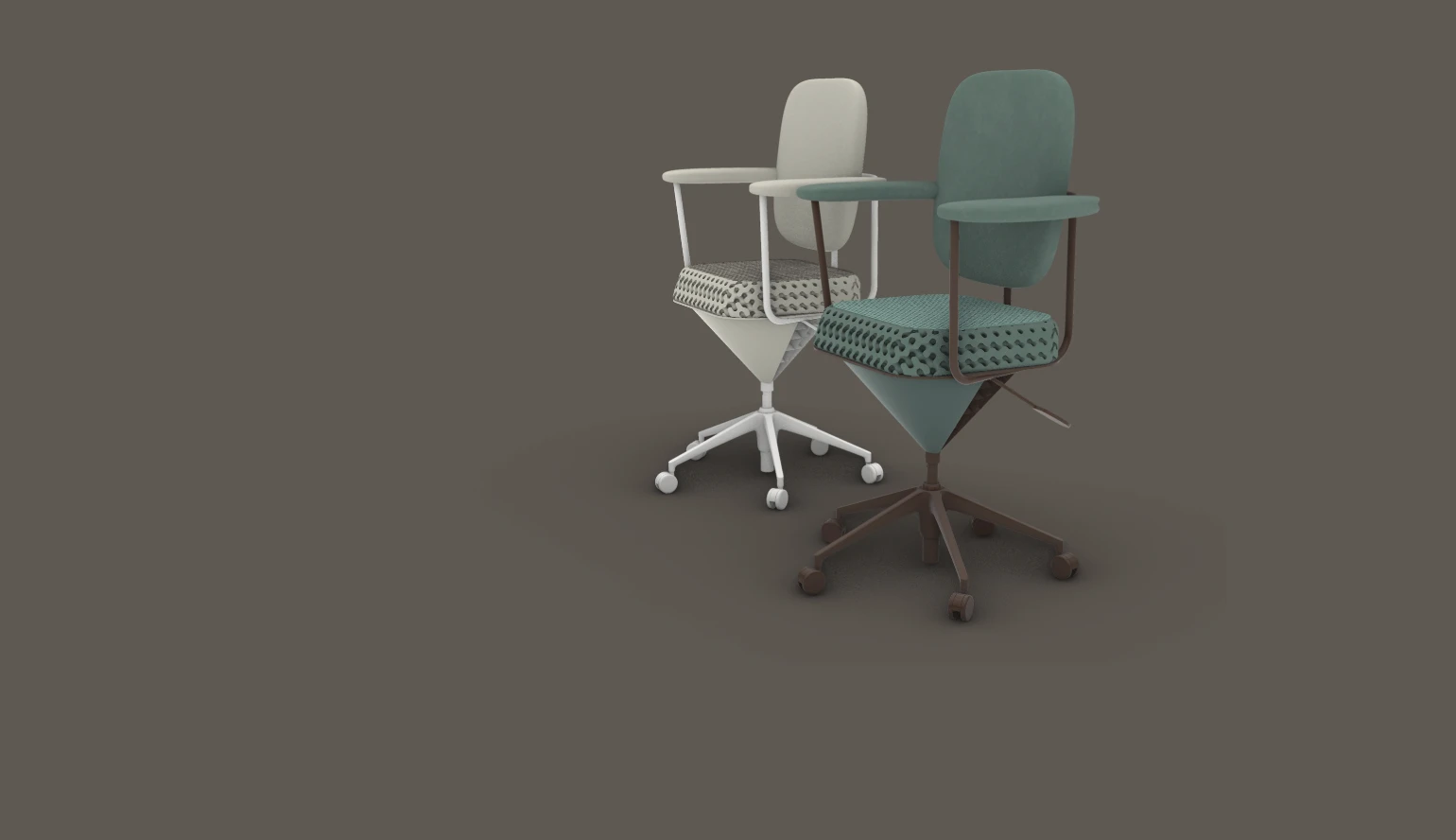
FLOWW Chair
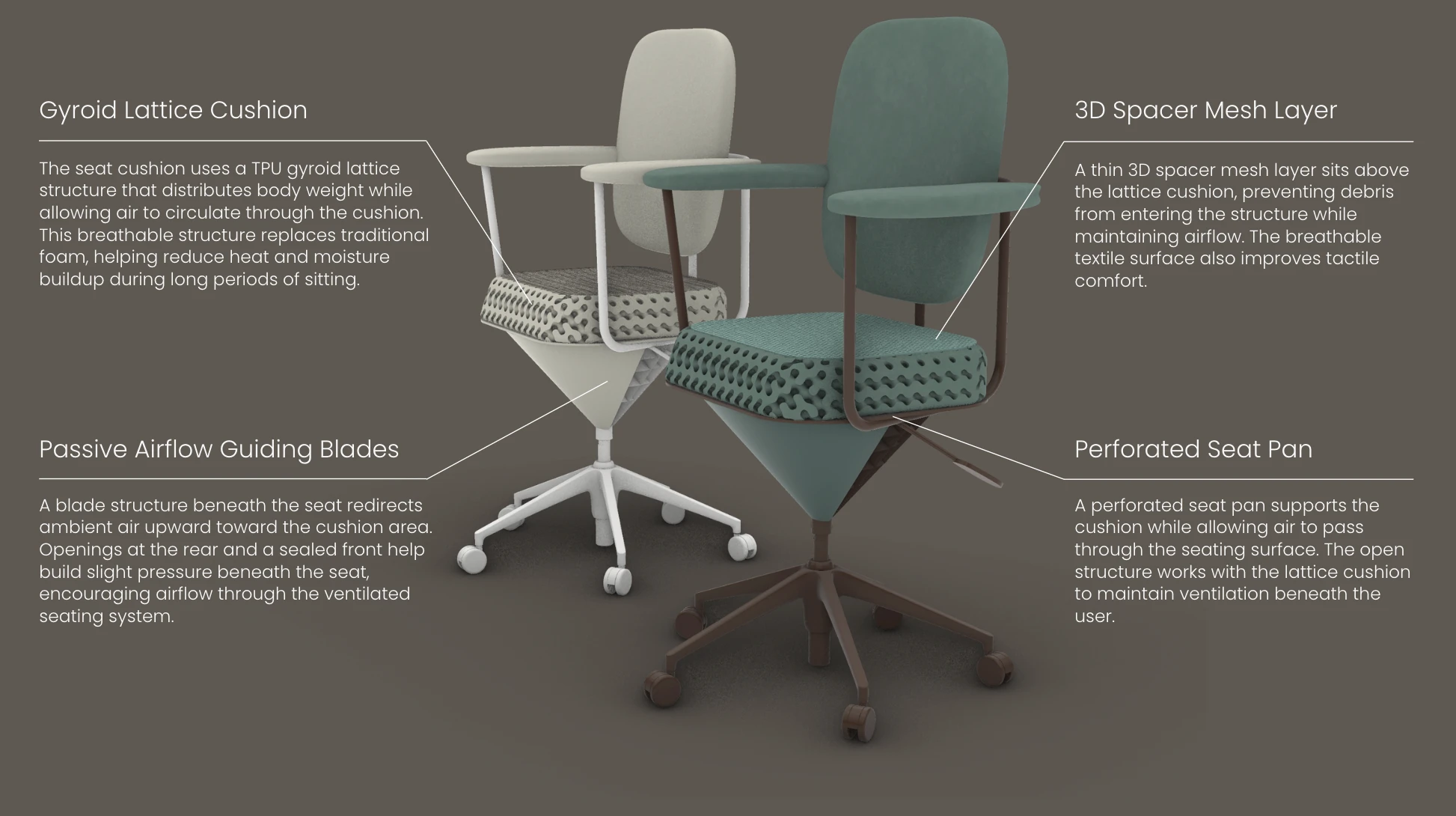
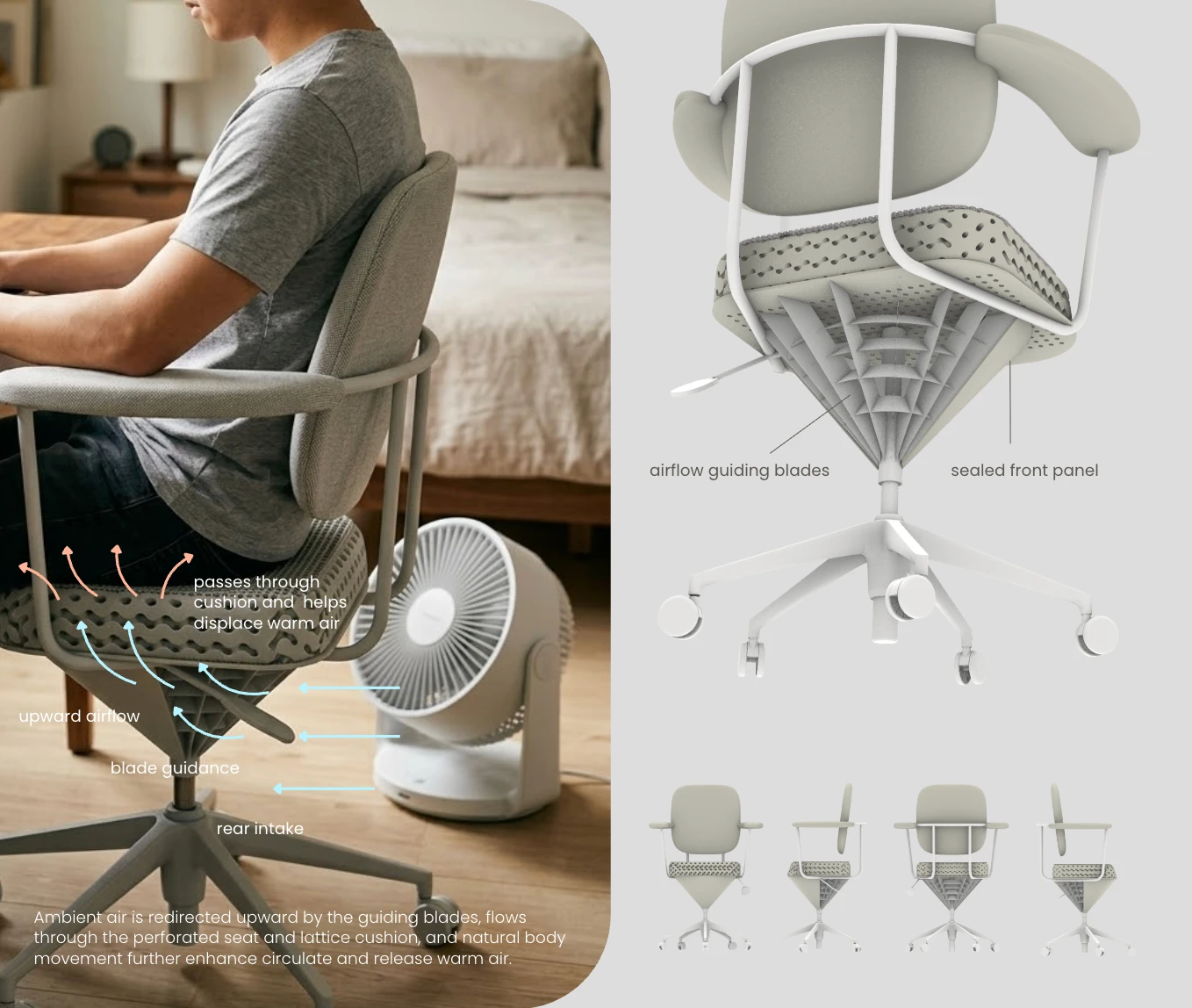
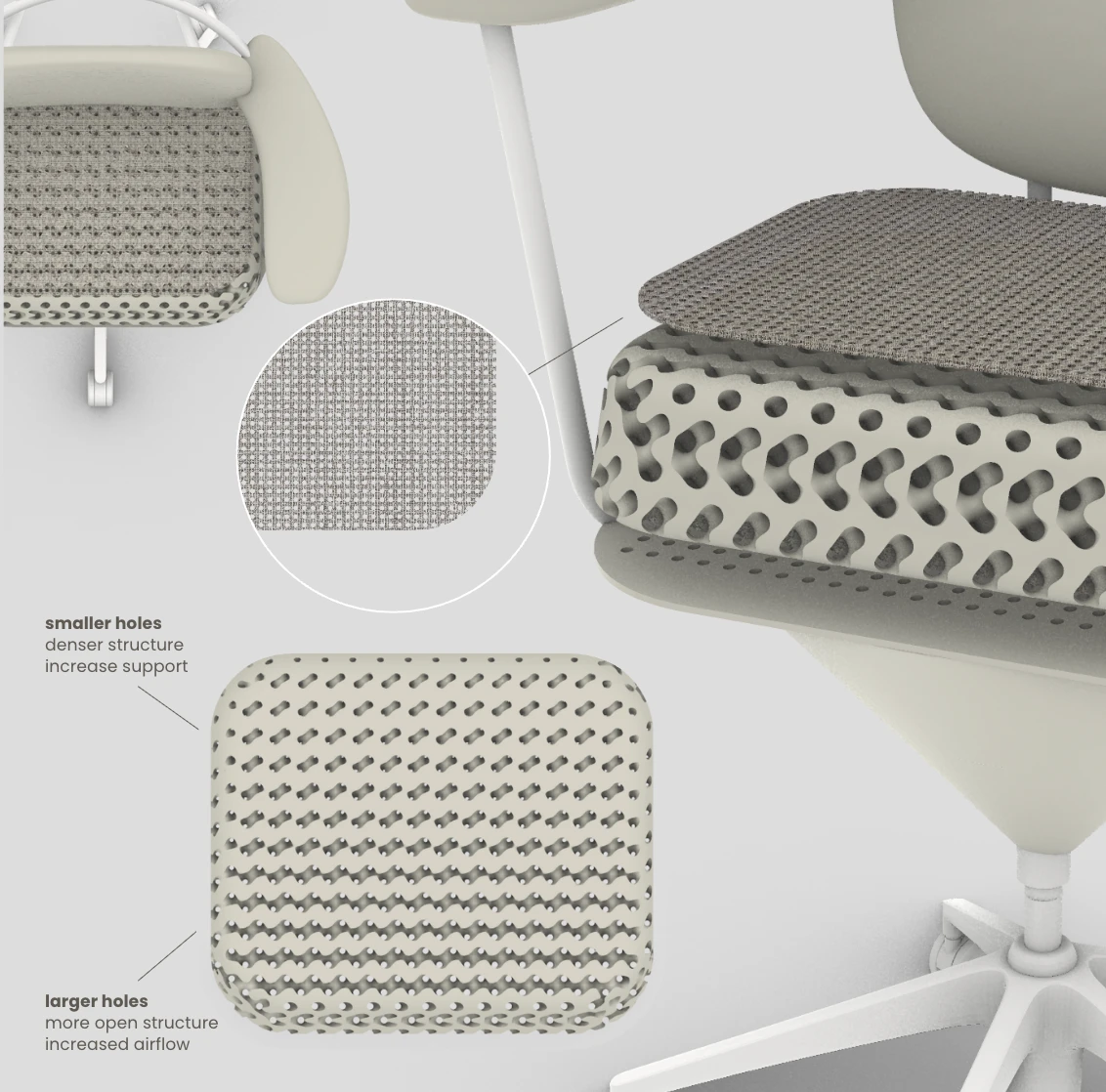
FLOWW uses passive airflow to improve thermal comfort while retaining the ergonomics of a modern desk chair. A removable spacer mesh sits above a gradient gyroid lattice cushion and perforated seat pan.
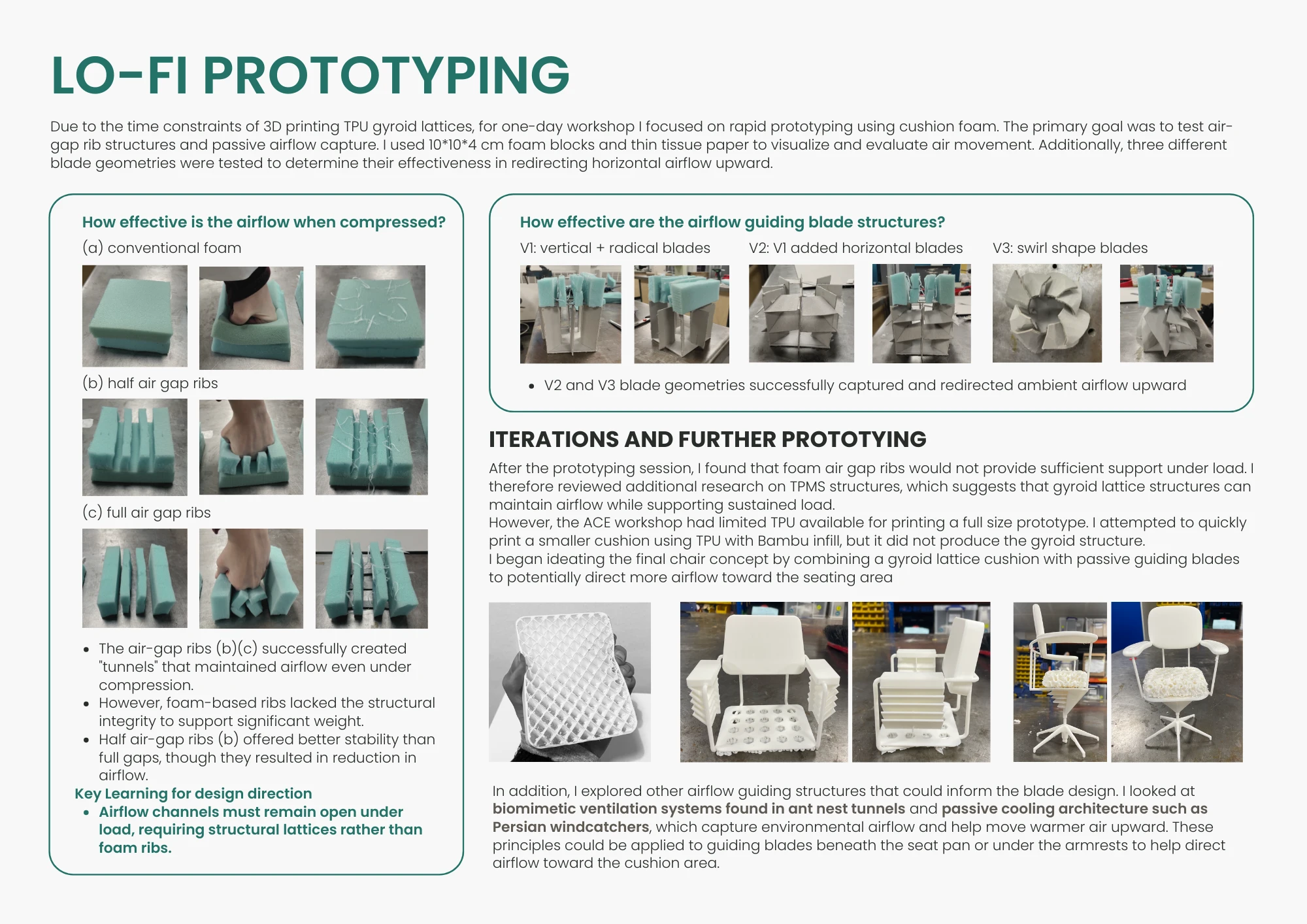
Guiding blades beneath the seat capture ambient movement from fans, air conditioning, and general room circulation, directing it upward through the ventilated structure.
Process
Learning through CAD and physical prototypes
This was my first project using CAD modeling and 3D printing. Developing the gyroid lattice required repeated experiments with geometry, materials, support, and airflow assumptions.
Next steps
Test airflow, support, and ventilation
Future work includes CFD simulation, physical airflow experiments, further gyroid configuration studies, and continued iteration on the overall seating experience.